Sunday, December 02, 2007
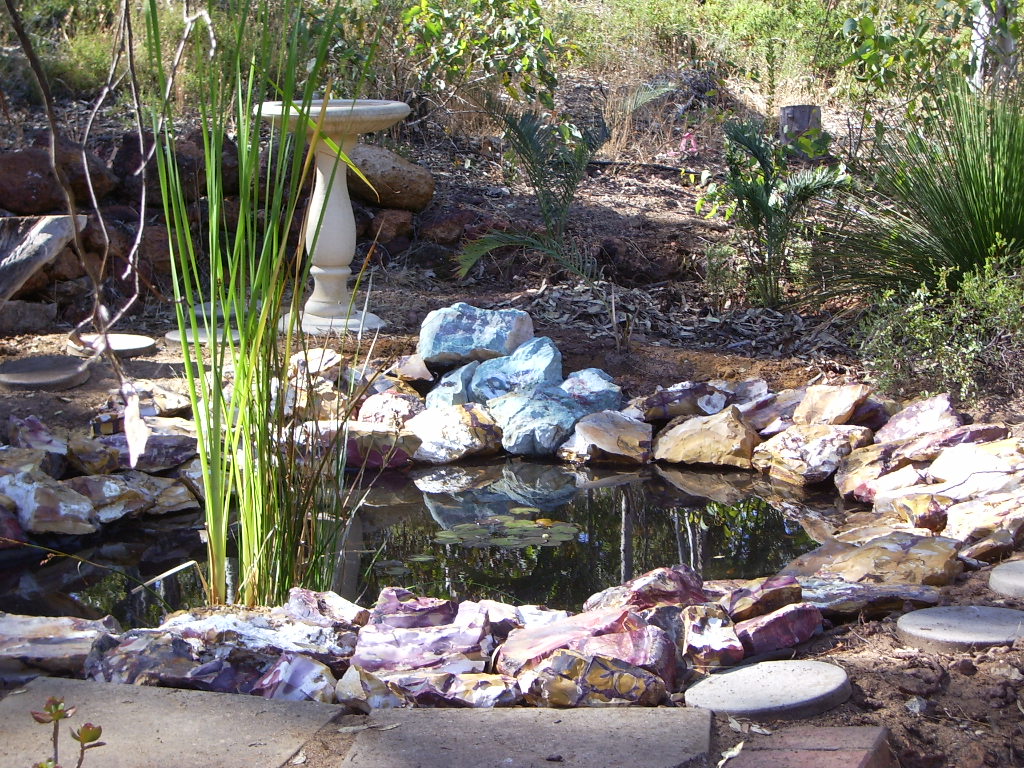
Gardening
Thursday, November 15, 2007
Brooklands
All sorts of records were set at Brooklands including the Land Speed Record and the first ever Grand Prix was held here in August 1926. Motorcycle racing was also held here from 1908.
Read about Brooklands' aviation history here. One of Britain's first aerodromes was built in the middle of the racing track at Brooklands. In 1910 The British and Colonial Aircraft Company, later renamed The Bristol Aeroplane Company, took premises at Brooklands and offered flying lessons.
By August 1914, with the declaration of war on Germany, Brooklands and all its services including the race track were taken over by the war office and a Military Flying School was formed which employed instructors and aeroplanes from many of the existing schools. Over the next 20 years up to the outbreak of World War II, the Vickers factory at Brooklands produced a broad range of military and civil aircraft types. Brooklands Aerodrome was a regular venue for aviation events with air races, flying displays, dawn patrols and open days staged.
On August Bank Holiday Monday in 1939 the last ever motor race meeting had taken place on the famous track and later in the month the final Brooklands Flying Club event was held before all civil flying ceased. Everything was subordinated to the priorities of wartime aircraft production.
Of the 11,461 Wellingtons built by Vickers by 1945, 2,515 were built at Brooklands. The Wellington was Britain's most numerous and successful twin-engined bomber of World War II.
In the 1950s Brooklands produced the Vanguard, powered by four Rolls-Royce Tyne turbo-props, and in the 60s they entered the jet age with the Vickers VC10. This four-engined long-range passenger transport was the largest airliner ever produced in quantity in the UK and required the construction at Brooklands and Wisley of vast new aircraft assembly hangars. The VC10 was powered by Rolls-Royce Conway engines mounted at the rear beneath a distinctive T-shaped tail.
The VC10 pictured above is open for viewing at Brooklands. This aircraft was donated by the Sultan of Oman who had the interior designed for comfort! (As you would.)
Then came Concorde. Although a number of factories in Britain and France were involved in its manufacture, together with many subcontractors, more of Concorde was actually designed and manufactured at Brooklands than at any other site.
The first meeting between BAC and Sud-Aviation in Britain was held in Sir George Edwards' office at Brooklands in July 1961. Concorde entered commercial service with British Airways and Air France on January the 21st 1976.
Sadly Concorde flies no more but places like Brooklands are acquiring their own Concorde for exhibiting.
Although a production aircraft, G-BBDG, or 'Delta Golf' as the aircraft is more affectionately known, never saw airline service but, along with Concorde F-WTSB (c/n 201), she did the bulk of the flying that allowed the final certification of Concorde for airline service. Having accumulated 1282 flying hours (of which 514 were supersonic), DG last flew on Christmas Eve 1981.
First we took our seats in the airport bus where the tour guide explained the tour and some of the history. Then we walked up into the aft cabin which tells the Concorde story from the 1950s to present day. Next you walk through to the passenger cabin which is very narrow with only two seats each side of the aisle. The windows are tiny to be able to withstand the heat and pressure when flying at high altitude and high speed, as Concorde does. Each window has its own cooling system to prevent passengers burning themselves. The paint for the exterior had to be developed to withstand not just excessive heat but the fact the metal expands. The plane grows eight inches longer when travelling at its highest speed.
We sat and watched a video describing Concorde's journey.
Our guide had himself flown on Concorde and described the excitement of "taking off twice". First you experience the G force of initial take-off then again at 30,000feet when it climbs to 60,000feet and accelerates to twice the speed of sound.
Wednesday, November 07, 2007
Going home
And now it's time to go home and I'm going to take Autumn with me!
Monday, October 29, 2007
Thursday, October 25, 2007
The West Country
This (above) is the Eden Project. Something I've heard lots about and looked forward to visiting. As I walked round, it was hard to believe it hasn't been there for decades. The 'biomes' are full of huge plants and trees. The whole place is so obviously loved and cared for.
Eden is all about man's relationship with and dependence upon plants. Much of our food, our clothes, our shelter and our medicines come from the plant world. Without plants there would be no oxygen for us to breathe, no life on earth.
The Eden Project is a showcase for all the questions and many of the answers. But Eden is not a worthy, over-serious, guilt-ridden place; nor does it preach. It is about education and communication of the major environmental issues of the day, always presented in an engaging, involving, even humorous way.
(click on images to enlarge)
It's an amazing place and I'd recommend it to anyone, especially people with children.
The it was on to the Lost Gardens of Heligan.
As with the Eden Project, there is a team of dedicated people who love this place.
Our discovery of a tiny room, buried under fallen masonry in the corner of one of the walled gardens, was to unlock the secret of their demise. A motto etched into the limestone walls in barely legible pencil still reads "Don’t come here to sleep or slumber" with the names of those who worked there signed under the date - August 1914. We were fired by a magnificent obsession to bring these once glorious gardens back to life in every sense and to tell, for the first time, not tales of lords and ladies but of those "ordinary" people who had made these gardens great, before departing for the Great War.
And, yes! I did take this photo below. More by luck than skill. But it's one that will go in my album. My happiest holiday memories are of seaside places in Devon and Cornwall. Sandy beaches, rock pools, clifftop walks, castles, oh... when I'm old and can't remember my name I will remember these places.
And three sisters in one room? It was comical, hysterical even.
So LOOK! How do cars pass eachother? Well, there are little bulges every now and then where one car can cram itself against the hedge while the other passes.